The global AI chip market is experiencing explosive growth, projected to surge from $29.65 billion in 2024 to $164.07 billion by 2029—a remarkable compound annual growth rate of 41.60%.
But beneath these staggering numbers lies a complex technical challenge that could make or break the AI revolution: how to efficiently schedule workloads across an increasingly heterogeneous landscape of CPUs, GPUs, TPUs, and NPUs.
The New Computing Reality
Modern data centers are no longer homogeneous seas of identical processors.
According to IDC 2018 data, CPU and GPU costs account for 50-82.6% of server expenses in inference and machine learning servers, with GPU costs alone representing 72.8% of machine learning server costs.
This hardware diversity is accelerating: TPUs now account for 13.1% of market share in 2025, led by Google’s cloud deployments, while custom ASICs designed for edge inference are projected to reach $7.8 billion in 2025 revenue.
A 2024 Lawrence Berkeley National Laboratory report reveals that while AI servers operate at 80-90% utilization, non-AI servers often run below 60%, highlighting the dramatic performance gap between different workload types and the infrastructure designed to support them.
The Scheduling Paradox
The heart of the challenge lies in workload orchestration. Deep learning technologies represented 61.4% of the AI workload management market in 2024, reflecting their central role in training and managing high-volume data models.
Traditional scheduling frameworks were never designed for this level of complexity.
Training workloads held the largest market share of 45% in AI data centers in 2024, but the landscape is shifting rapidly. Industry analysts note that inference workloads—once an afterthought—are now consuming compute resources at unprecedented rates.
The problem isn’t just about having the right hardware; it’s about using it efficiently. OpenAI has publicly estimated that typical GPU utilisation hovers around just 33%, meaning billions of dollars in computing infrastructure sits idle even as demand skyrockets.
The Heterogeneity Challenge
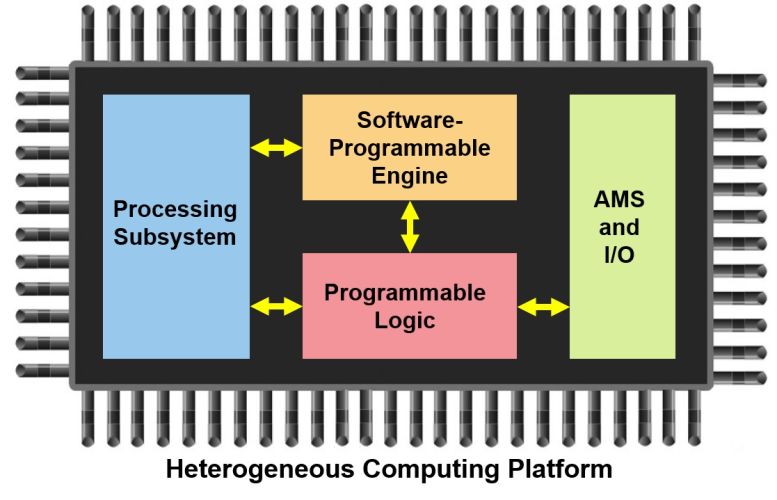
Accelerator-based heterogeneous architectures—such as CPU-GPU, CPU-TPU, and CPU-FPGA systems—are widely adopted to support popular artificial intelligence algorithms that demand intensive computation.
When deployed in real-time applications, such as robotics and autonomous vehicles, these architectures must meet stringent timing constraints.
The scheduling complexity multiplies when different processor types must work together. Research on fairness schedulers like Allox assumes that both GPUs and CPUs are interchangeable resources and takes into account the affinity of workloads towards different compute resources, modeling resource allocation as a min-cost bipartite matching problem.
But the reality is messier. Different AI chips excel at different tasks:
- CPUs handle sequential processing and control logic
- GPUs dominate parallel matrix operations for training
- TPUs optimise for large-scale tensor operations in neural networks
- NPUs deliver energy-efficient inference on edge devices
Smartphones embedded with neural processing units are expected to ship over 980 million units in 2025, adding another layer of heterogeneity as edge computing proliferates.
The Economics of Inefficiency
The financial implications of poor scheduling are staggering. Studies demonstrate energy savings of 32-47% compared to static allocation approaches across diverse AI workloads, with potential annual savings of $378-$512 per computing node in typical data center environments.
At enterprise scale, these numbers become transformative. The global AI workload management market is expected to grow from $13.5 billion in 2024 to $163.4 billion by 2034, at a CAGR of 28.3%, driven by the urgent need to optimize increasingly expensive infrastructure.
NVIDIA introduced the L4 GPU with a thermal design power of 40-72 watts in 2023, and the GB200 GPU with TDP of 1,200 watts in 2024.
The massive power consumption of modern AI accelerators—and the associated operational costs—make efficient scheduling not just a technical concern but an environmental and business imperative.
Real-World Scheduling Solutions
Companies are racing to solve these challenges through innovative software frameworks.
Schedulers like Dorm dynamically partition different types of compute resources for each deep learning training job, assuming that GPUs, CPUs, and memory are complementary resources where the capacity of each can influence training job throughput.
In practice, Kubernetes has emerged as the de facto standard for container orchestration, but it wasn’t designed for GPU-intensive workloads.
Research shows that advanced GPU schedulers can achieve 2.5x higher memory usage, 6.1x higher GPU utilization, and 1.2x higher power consumption compared to Kubernetes default GPU extensions.
NVIDIA’s recent moves underscore the urgency: in January 2025, they open-sourced their KAI (Kubernetes AI) Scheduler, bringing enterprise-grade GPU management to the broader community.
The scheduler enables fractional GPU allocation—allowing multiple workloads to share a single GPU—potentially unlocking massive efficiency gains.
The Interconnect Bottleneck
As AI compute scales to trillions of parameters and multi-node training becomes standard, the interconnect—not the chip—has emerged as the new bottleneck. Data movement, not math, now defines system-level efficiency.
This represents a fundamental shift in thinking. For years, the industry focused on raw compute power—measured in FLOPS (floating-point operations per second).
But as models grow larger and training becomes distributed across thousands of chips, the ability to move data between processors has become the limiting factor.
Modern accelerators can deliver petaflops of raw floating-point performance, yet the links between them struggle to keep up.
Despite advances in high-bandwidth memory (HBM3, HBM3e) and NVLink 5.0 or PCIe Gen5/6, bandwidth per watt is scaling far slower than compute throughput.
The Path Forward
Global computing power scale is expected to grow significantly from 1,397 EFLOPS in 2023 to 16 ZFLOPS in 2030, with a compound growth rate of 50% during this period. Meeting this demand will require fundamentally new approaches to workload scheduling.
The era of “just building bigger, faster chips” is ending. What matters now is efficiency, composability, and adaptability. Industry leaders are shifting focus from peak performance to balanced systems that consider compute, memory, and communication holistically.
The solutions emerging include:
- AI-driven scheduling: Using machine learning to predict workload requirements and optimise placement
- Dynamic resource allocation: Systems like Ubuntu Linux 25.04’s integration of NVIDIA Dynamic Boost technology dynamically redistribute power between CPU and GPU components based on workload demands,
- Hybrid architectures: Hybrid AI chips combining CPUs with NPUs are forecast to grow 22.4% year-over-year in 2025
Regional Competition Heats Up
North America held a dominant market position in 2024, capturing more than 45.7% share and accounting for approximately $6.1 billion in revenue within the AI workload management market. But the landscape is shifting.
China’s intelligent computing power has reached 725.3 EFLOPS in 2024 and is expected to climb to 2,781.9 EFLOPS by 2028, with a compound growth rate of 46.2% from 2023 to 2028.
The rapid expansion is driving innovation in domestic chip design and orchestration software as countries seek technological independence.
Looking Ahead
Deployment is becoming more heterogeneous—few systems will rely on a single type of accelerator; orchestration across devices is becoming standard.
- The question is no longer whether to embrace heterogeneous computing, but how to do it effectively.
- The global AI workload orchestration market reached $3.12 billion in 2024 and is expected to grow at a CAGR of 23.8% from 2025 to 2033, reaching $25.41 billion by 2033.
- The investment reflects the industry’s recognition that scheduling software is just as critical as the hardware it manages.
- As one industry analyst put it: “High theoretical FLOPS don’t matter if data movement or stalls dominate.”
- The winners in the AI era won’t necessarily be those with the fastest chips, but those who can orchestrate heterogeneous resources most efficiently—turning silicon and software into solutions that actually work.